
No War For Heavy Metal (Outcore)

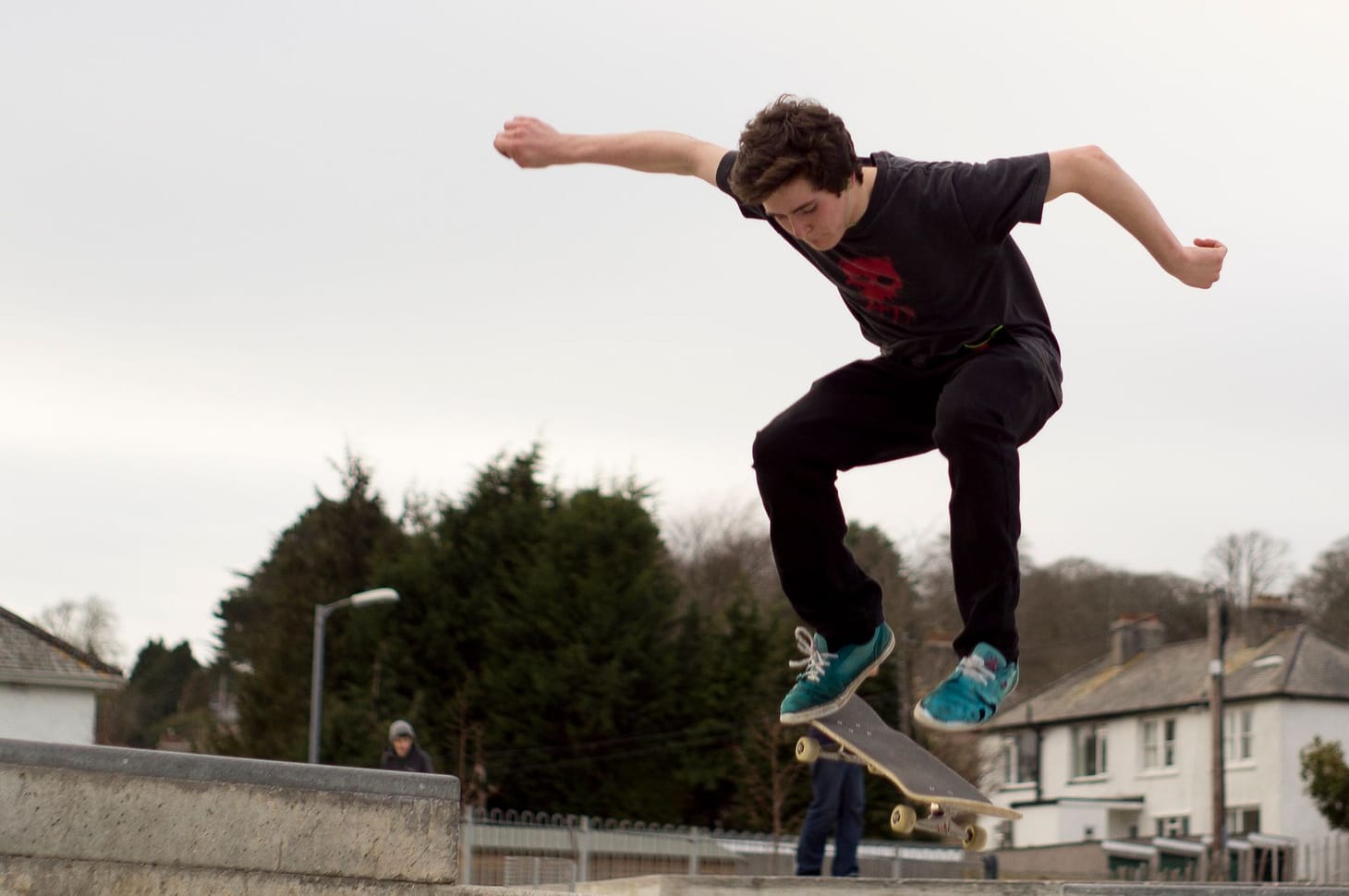
This article about the lifecycle of tricks in skateboarding really brought back memories for me. It heavily references the early nineties, the period I was most active in skateboarding. As noted in the piece, it was a time of big pants and small wheels. Lucas Wiesenthal, who wrote the piece, focuses on a few particular tricks, one of which is the pressure flip. Wiesenthal relates how quickly tricks came into vogue and how, just as quickly, they went out. I distinctly remember the cycle of the pressure flip (and occasionally, I still think about it).
Pressure flips initially seemed really cool and exotic. I loved technical flat-ground tricks and was never really into the Evel Knievel-style big scary stunts. Once everyone was doing the trick, though, I was glad to see its departure from the scene. Back then, once a trick was "out," it was verboten to do it, unless you were having a larf. To do tricks that were no longer fashionable was to risk serious scorn.
And that’s basically what skateboarding was like in the early ’90s. Doing a trick that was a month past its expiry date could get you vibed out of a spot, and the self-worth of teenage skaters worldwide hinged on how closely they could emulate a group of slightly older teenage skaters from San Francisco.
Reading the article, all of this easily comes back to mind in vivid detail. I used to ask my friends who would go into D.C. to skate at Pulaski Park, which was featured in New Deal videos, what tricks were popular with that crowd. I even recognize the pressure flip trick guide from Thrasher that was linked to from the piece.

I wasn't as active in skateboarding later on in the decade, but I started to notice a shift that has recently become more complete. You can now basically do any trick and no one is going to hassle you. It all comes down to personal style and expression.
“Aside from maybe a street plant or something, if you do it right, I don’t think there’s really much limitation on it,” says Ellington. “It’s who’s doing it, and they’re doing it in a certain way, and they’ve got speed and they’re flowing. I couldn’t write off anything. You could kind of do anything and get away with it.”
I love this change in skateboarding. That — and the fact that I have a skatepark nearby — makes me wish I were still active in the sport today.
via Clive Thompson
The aforementioned article got me curious enough to checkout Braille Skateboards, which makes inexpensive skateboards, offers lessons and encourages people to skate regardless of age, color, body shape or size.

Treasure Hoard
Sign up for Treasure Hoard to receive email digests in your inbox.